Showing posts with label IES Vicente Medina. Show all posts

20 June 2016

Anne Frank by 4º ESO

The students at IES Vicente Medina in Archena (Murcia), share with us a new work. It's about the book "The diary of Anne Frank".  I hope you like it , it's great!. 
Inmaculada López, the English teacher show us.

After nearly two months without publishing any posts, we are back with this awesome work by students from 4º ESO B and 4º ESO C. As they say in English, all good things come to those who wait.
During the 2nd term students read “The Diary of a Young Girl. Anne Frank” and, like usual, decided they were going to surprise the teacher with fantastic ideas. They thought that good ways to work on it would be:
  • Making a film version of the book.
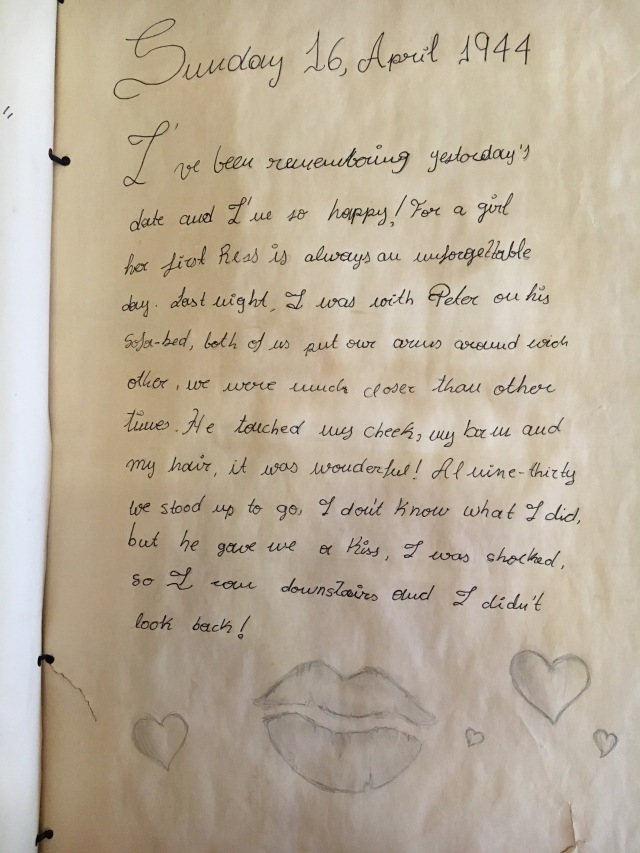
  • Writing a giant version of the Diary.
  • Interviewing Otto Frank.
Before handing in their final product, they all had to write the scripts of their work on a Google Document and share it with the teacher. The whole process took them all of the 2nd term and is part of our year project “Dark Sides 4º ESO“.
Their work is outstanding. Here is an example of each:
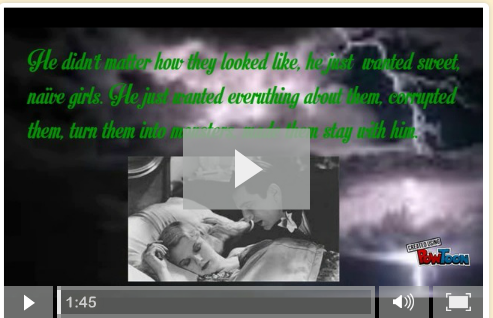
FILM VERSION


GIANT DIARY
INTERVIEW WITH OTTO FRANK
You can click on the photo below for further information on how the whole task was carried out and to view other videos.


Screen Shot 2016-04-06 at 19.00.29

16 June 2016

Stop Bulling

Today we share an interesting work about Bulling from IES Vicente Medina in Archena (Murcia). Inmaculada López, the English teacher tells us. 

Bullying is a social scourge which affects more people than we can imagine. Victims of bullying are often too scared to talk about what is happening to them to the point that sometimes they prefer to kill themselves rather than talk to teachers or parents.

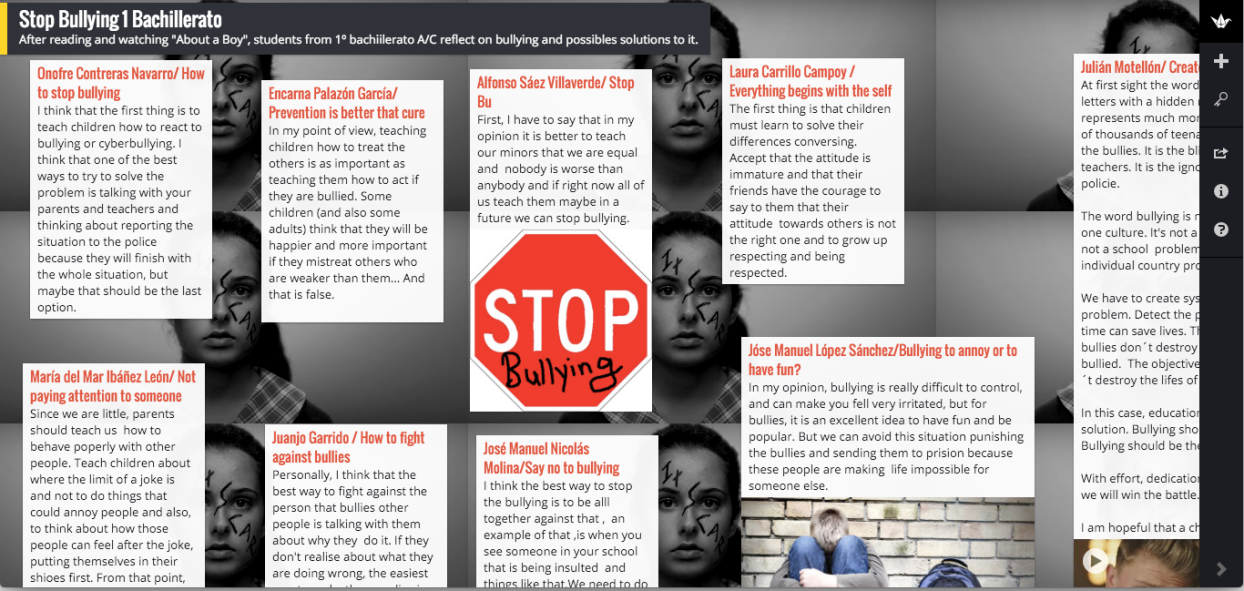
During the 2nd term, 1º Bachillerato students have been working on this topic in different ways. First of all, they read and watched “About a boy”, a “funny” story which deals with serious topics such as the one under consideration in this post. After reading and watching, they all contributed to create a collaborative wall with Padlet in which they offered possible solutions to the problem of bullying at school. Click on the photo to view it:
1º Bachillerato A/C
1º Bachillerato A/C
Once the wall was finished, they organised themselves into groups of 4/5 students and wrote some leaflets using smore to start a campaign against bullying at school. These leaflets had to include videos in which they put themselves in the shoes of the bullies and the victims. As expected, they did an amazing job. Watch the videos and judge for yourselves:


If you want to find out more about how the whole process was carried out or have a look at the leaflets, click on the photo:
The process

26 February 2016

Psycho

Today we share a great work about the film "Psycho" from IES Vicente Medina in Archena (Murcia). Thanks to Inmaculada López, the English teacher. Congratulations to the students!

In 1º Bachillerato class we were watching Psycho as part of the project we are working on this year, 1º Bachillerato in Shock. After watching the film, the students had to fill in a Google questionnaire in which they had to give their opinion about some of the aspects dealt with in the film.
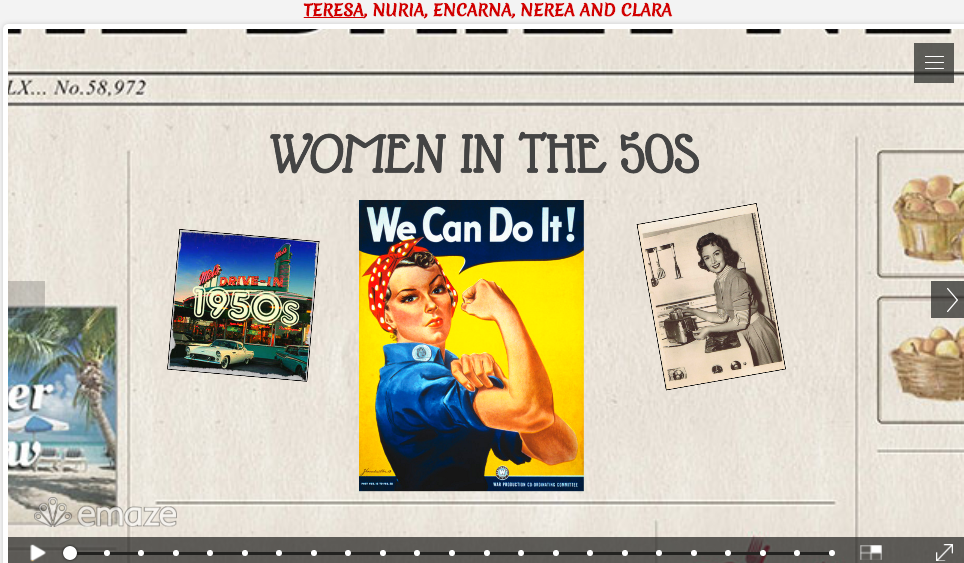
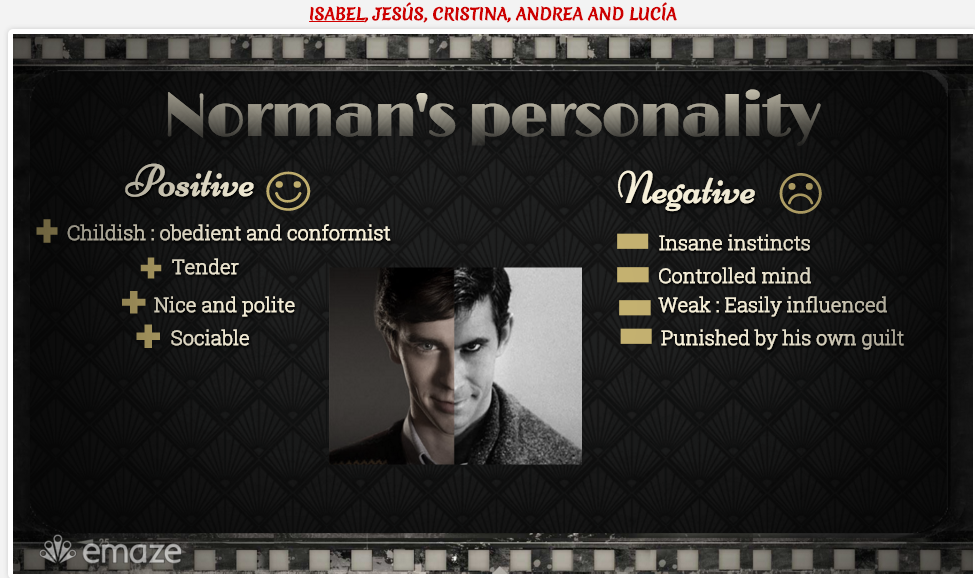
Once they had all done this individual task, it was time to organise themselves into groups and decide on whether they wanted to do some research on the role of women in the 50s in order to understand why Marion acted the way she did when she decided to steal the money from her boss or to work on a presentation in which they had to explain Marion and Norman’s good and evil sides to the rest of the class and try to demonstrate that there is an evil side to all of us. To such an aim, they could also talk about famous literary characters such as Dr Jekyll and Mr Hyde or Frankenstein. They could even use famous film or TV series characters such as Darth Vader from Star Wars or Walter White in Breaking Bad. You can review the whole process of the different tasks here.
Have a look at the students’ fantastic work. Check all of them as they even interviewed some of their grandmothers so that they could talk about what life was like for women in Spain in the 50s (Nuria, Teresa, Encarna, Clara and Nerea’s group). Click on the photos to access the presentations and have fun:

WOMEN IN THE 50S:

 Screen Shot 1
Screen Shot 2016-01-26 at 18.03.45
Screen Shot 2016-01-26 at 22.00.11

GOOD AND EVIL SIDES:


Screen Shot 2016-01-26 at 22.04.08

Screen Shot 2016-01-26 at 22.05.38


Screen Shot 2016-01-26 at 22.06.41

23 February 2016

Literature and Music, why not?

Today we publish a new work from IES Vicente Medina in Archena (Murcia). An interesting proposal about music and literature to work in class. 
A great job. Don´t forget to read!

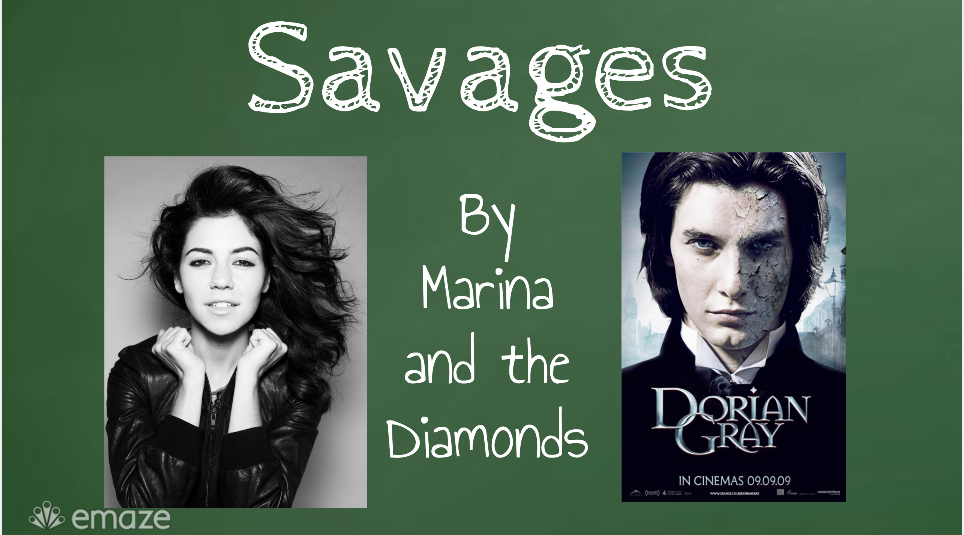
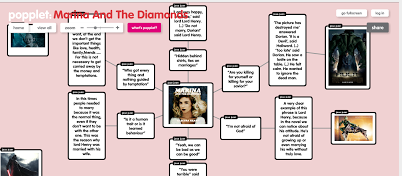
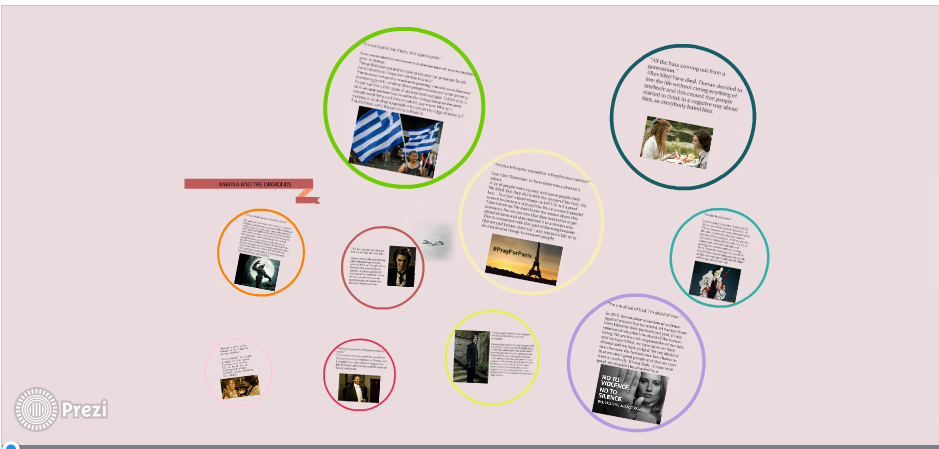
Last term, students from 4º ESO read “The Picture of Dorian Gray” by Oscar Wilde as part of the project they are working on this year, which is called “Dark Sides” and which we have already published a few posts about. Some students suggested linking Wilde’s masterpiece with a song they really liked, “Savages” by Marina and The Diamonds and which they thought also dealt with some of the topics which come up in the novel:


So, the idea was to relate Literature with music. Well, why not? I let them explain the connection they had made between the two and the answer was obvious: there is a good and evil side to all of us, something they all explained clearly in their work. Click on the photos to have a look:
Screen Shot 2016-01-20 at 18.46.07

Screen Shot 2016-01-20 at 18.47.18

Screen Shot 2016-01-20 at 18.35.09

Screen Shot 2016-01-20 at 18.36.34

Screen Shot 2016-01-20 at 18.38.41

Screen Shot 2016-01-21 at 16.15.08

Screen Shot 2016-01-21 at 16.16.42
Please note that all this was orally presented by the students, but due to technical problems recording was not possible :-(

4 December 2015

Reading the classics is not boring. The picture of Dorian Grey

From IES Vicente Medina in Archena (Murcia), Inmaculada López, the English teacher, tells us about the interesting work her students have done in class.
Who says reading the classics is boring? The way I see it, it all depends on how you present literature to your students. One more year, and I guess under my influence (I have been their teacher for 3 years now), students from 4º ESO made a wise decision and for one of their readings chose the only novel by one of the greatest writers in the English language (and probably in universal literature), Oscar Wilde.
Keats and Yeats are on your side, but Wilde is on mine (Morrissey)
How could I present such a complicated novel as attractively as possible … and in English? Easy, let’s go back in time and try to understand the period in which he lived, Victorian England, and the morals of his time, what was accepted and what wasn’t. To such an aim, at the moment students are working on several tasks related to Victorian crime, Victorian fashion and Victorian entertainment which will be shared on different social networks as soon as they are ready … no rush. They are having fun, they are using English, they are learning! Therefore, why worry about time?
In the meantime, they have been reading a B1 adaptation of the novel and actively participating in literature talks which you can listen to by clicking on the photo:
Literature Talks
Literature Talks
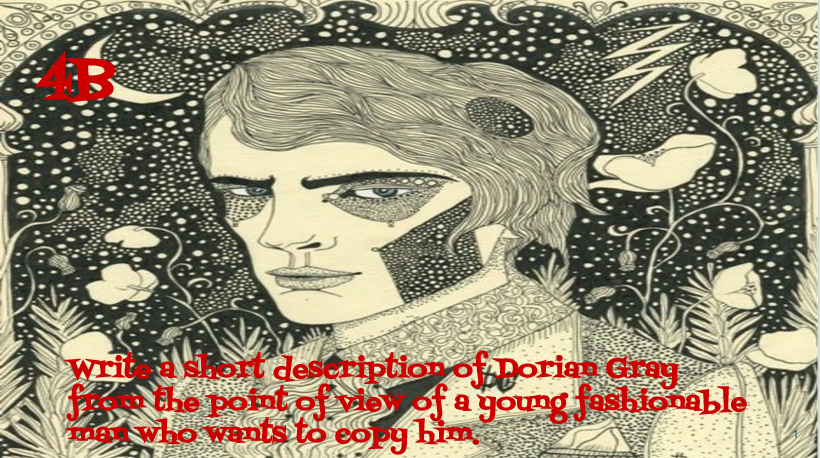
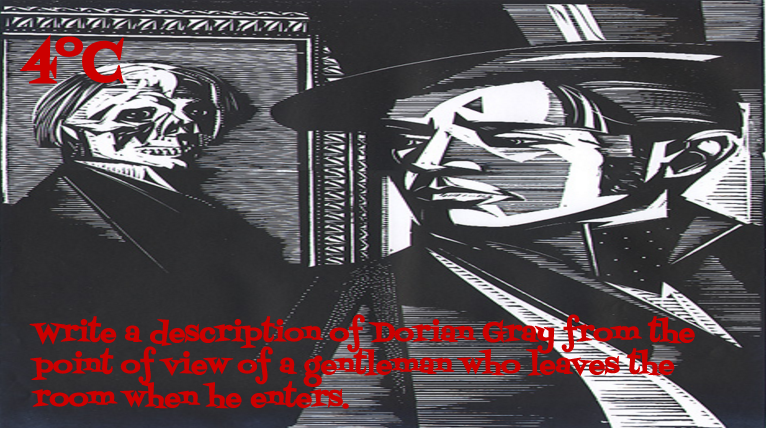
In addition, they have all collaborated on these Google presentations in which 4ºB had to write a short description of Dorian Gray from the point of view of a young gentleman who wants to copy Dorian while 4ºC’s description had to be written from the point of view of a respectable Victorian gentleman who refuses to mix together with Dorian in London fashionable parties.
4ºB
4ºB

4ºC
4ºC
All in all, reading this novel has been a great experience and working these tasks a way to show that reading the classics doesn’t have to be a difficult, boring, impossible task.
Once more, I am super proud of my 4ºESO students for their hard work.

23 November 2015

What freaks you out?

An interesting project from IES Vicente Medina in Archena (Murcia). We hope you like it.
This year, students from 1º bachillerato A/C are going to be working on a project called “1º Bachillerato in shock”.
Screen Shot 2015-11-03 at 16.27.10
Why this title? Well, because they are going through a series of changes in their academic lives which might cause them some stress … or not. It all depends on how you look at things and how you take them. As they say in English, always look at the bright side of life :-)
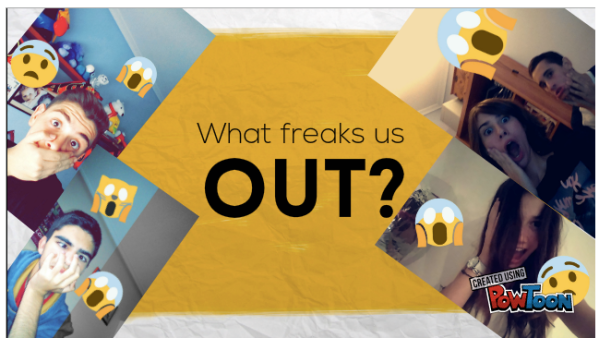
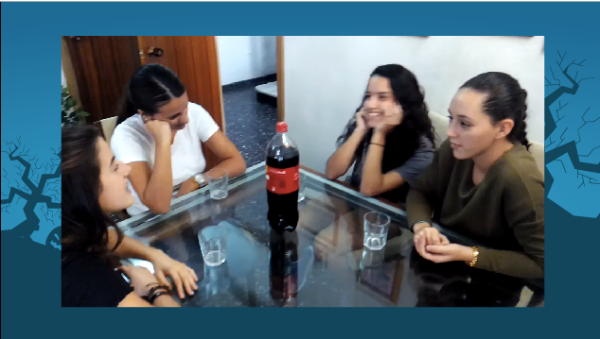
Anyways, for the first task of this project they were asked to think about what freaks them out, prepare a presentation and talk about it in class. We all have our weaknesses and things that we’d rather not talk about, although really it’s better if you talk about them and so here is some of their fantastic work:
Javi, Fran, Moisés and José Manuel Ortega
Encarna, Clara, Nuria, Nerea and Teresa
Alejandro, Ricardo, José Manuel López and José Manuel Nicolás
Onofre, Alfonso, Mª del Mar, Laura Carrillo and Juanjo
Laura Vidal, Laura Palazón, Julián and Luis
Isabel. Jesús, Cristina, Andrea and Lucía

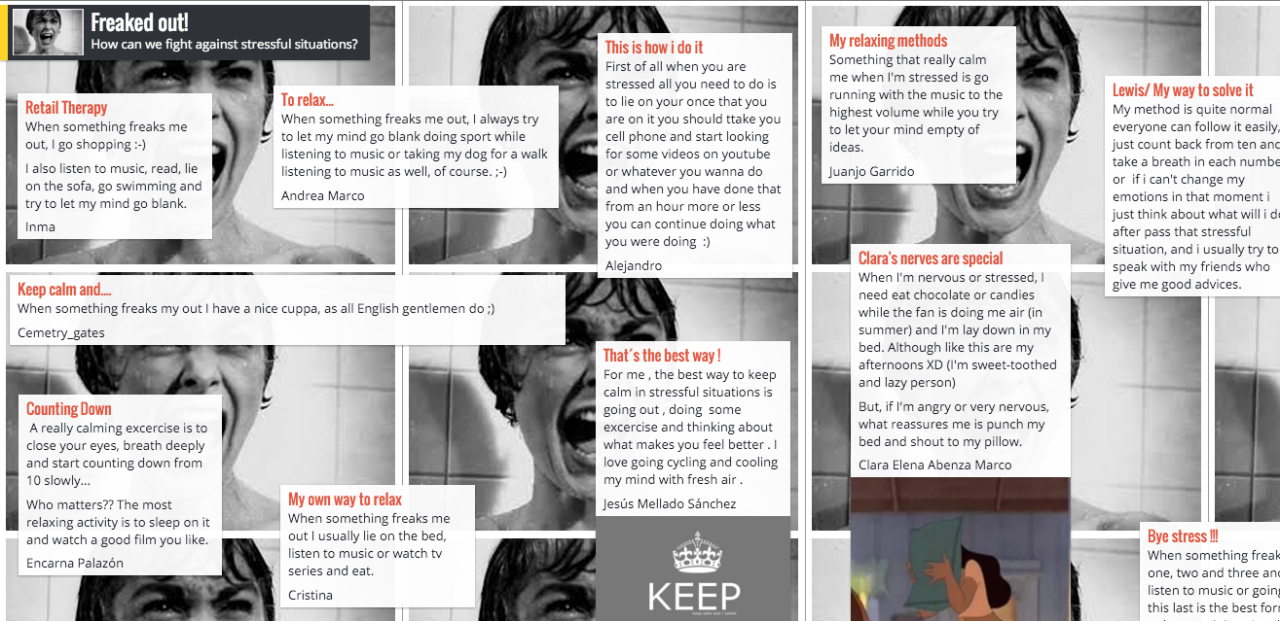
Once they finished their awesome presentations, students were asked to collaborate on a digital wall in which they had to give solutions for stressful situations. Have a look at some of them. They might come in handy at some point in your life, you never know!
Screen Shot 2015-11-04 at 16.00.29

16 November 2015

Syrian Refugees

From IES Vicente Medina in Archena (Murcia), the students at 4º ESO have been working in class about a currents news: Syrian Refugees. 
Inmaculada López, the English teacher, tell us:
This year in 4º ESO we decided we were going to start the English classes not with the usual revision of Present Simple, Present Continuous, Past Simple, blablabla (boooooring!!!!), but talking about something which has been making us think how lucky we are to have such a good life in a country where, fortunately, we don’t have to hide what we think or escape because there is a war which is finishing with everything we’ve known since we were born, including friends and family.
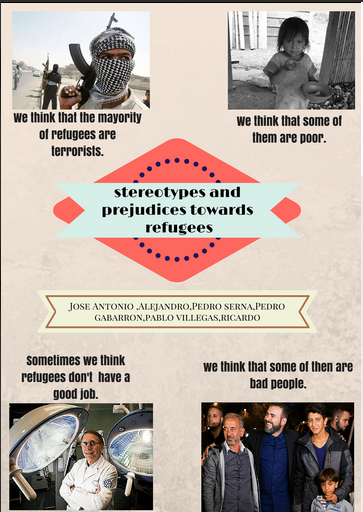
We thought it would be nice to show our respect towards Syrian refugees by dedicating a few of our classes to reflect on everything they have been going through and thus 4ºB were asked to prepare a poster, using Canva, about prejudices we have towards refugees and immigrants in general. They were also asked to think about possible ways to aid them. Click on the photo to have a look at the posters:
Give me shelter
Give me shelter
4ºC, on the other hand, had to put themselves in the shoes of the Syrian families who have been forced to leave their country in search of better life conditions. As such, they recorded radio programmes in which the interviewer had to interview the family on the radio. To do this, they first wrote the script on a Google document which they shared with the teacher and then they uploaded their programme to Spreaker. I, the teacher, have uploaded their programmes to Ivoox for practical reasons. You can listen to them here:
Syrian Refugees
Syrian Refugees
We would have preferred to talk about more pleasant topics, but all in all it has been a good way to start this academic year.

27 May 2015

Dracula

Today we share a new work from students 3rd ESO at IES Vicente Medina in Archena (Murcia).

Inma López, the teacher, tells us:

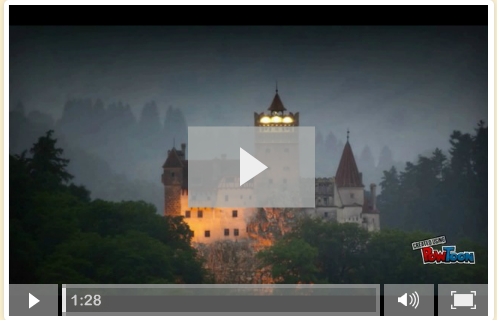
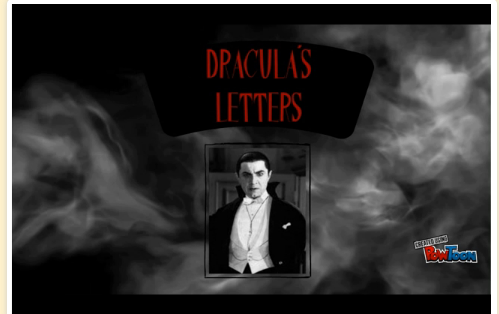
Students from 3º ESO B/C have been reading Dracula and working on it in two different ways. On the one hand, 3º B have been working on a task to show the difference between Victorian women and women nowadays. On the other hand, 3º C had to try and relate Dracula to Banksy’s graffiti to show how greed is still present in society and how the desire to advance at all costs can also have negative consequences. However, before organising the groups for such tasks, we had to work on the reading and learn about the characteristics of the Gothic novel or the ideal woman in Victorian England. We used the following reading guide to prove that Bram Stoker’s novel is not just a story about vampires:

Screen Shot 2015-04-29 at 13.56.50
How did 3º B show the evolution of women since Victorian times? They had to imagine that they were Jonathan in the 19th century and Mina in the 21st. Jonathan was a prisoner in Dracula’s castle and Mina wasn’t going  to sit and patiently wait for him like a 19th woman would do. She was going to stand up and make sure she wasn’t going to be there forever. They did a great job. Check out some of their videos:

Screen Shot 2015-05-06 at 10.41.11Screen Shot 2015-05-06 at 10.41.213ºC also did an excellent job trying to connect Dracula’s greed with some of Banksy’s graffiti. Most of them try to show that the desire to advance at all costs without bearing in mind other people’s feelings or opinions is not always a positive thing. Here are some of their awesome works:

Screen Shot 2015-05-06 at 10.45.12Screen Shot 2015-05-06 at 10.45.20Screen Shot 2015-05-06 at 10.45.28
You can also have a look at some photos of the whole process:

29 April 2015

Countries from the British Empire

Today we publish a new work from IES Vicente Medina in Archena (Murcia). The students 1ºESO C have done an amazing project called "The perfect Brit" 

Inmaculada López, the English teacher tell us:

During the 2nd term 1º ESO C students were reading “Around the world in 80 days” as part of the project “The perfect Brit” they have been working on in collaboration with 1º Bachillerato C students. I thought it would be a great idea to learn a bit of British history while having fun following Phileas Fogg’s adventures around the world, so we set out on our own after having a look at what Victorian life was like and what the term Victorian referred to.
After reading, students were asked to choose one of the countries Phileas Fogg visits and create a digital leaflet with information about it using smore. They had to include information about important cities, the main language, food and drink, popular music, sports or any other thing they thought it might be interesting. Besides, they were asked to present their work orally to the rest of the class and their presentations were recorded.
You can check out the task step by step plus their leaflets by clicking on the photo:
Screen Shot 2015-04-07 at 19.45.04
Also, I suggest that you watch these fantastic oral presentations. As always, they did a great job.
ORAL PRESENTATIONS
ORAL PRESENTATIONS

WELL DONE GUYS!!!