Showing posts with label Opinion. Show all posts

23 November 2015

What freaks you out?

An interesting project from IES Vicente Medina in Archena (Murcia). We hope you like it.
This year, students from 1º bachillerato A/C are going to be working on a project called “1º Bachillerato in shock”.
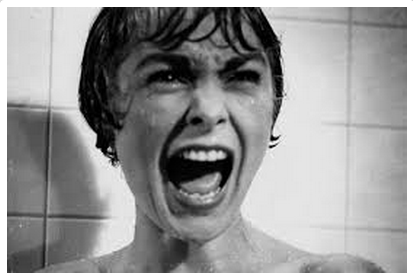
Screen Shot 2015-11-03 at 16.27.10
Why this title? Well, because they are going through a series of changes in their academic lives which might cause them some stress … or not. It all depends on how you look at things and how you take them. As they say in English, always look at the bright side of life :-)
Anyways, for the first task of this project they were asked to think about what freaks them out, prepare a presentation and talk about it in class. We all have our weaknesses and things that we’d rather not talk about, although really it’s better if you talk about them and so here is some of their fantastic work:
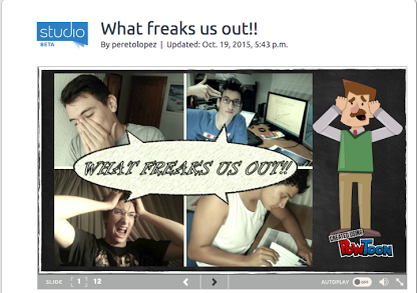
Javi, Fran, Moisés and José Manuel Ortega
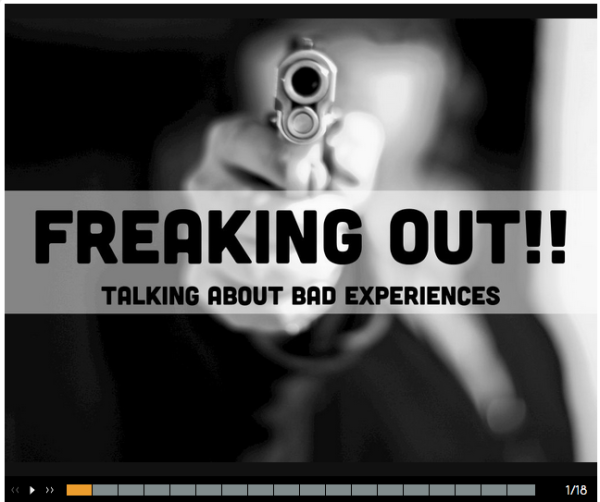
Encarna, Clara, Nuria, Nerea and Teresa
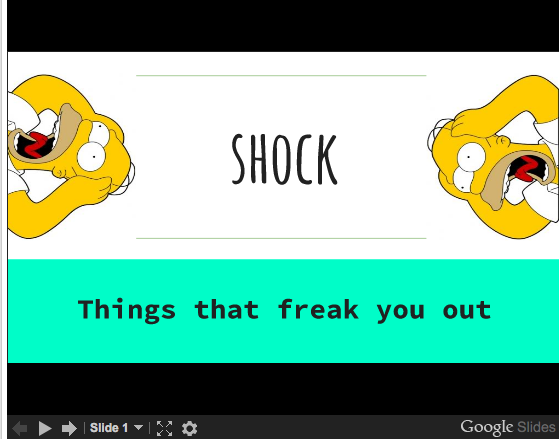
Alejandro, Ricardo, José Manuel López and José Manuel Nicolás
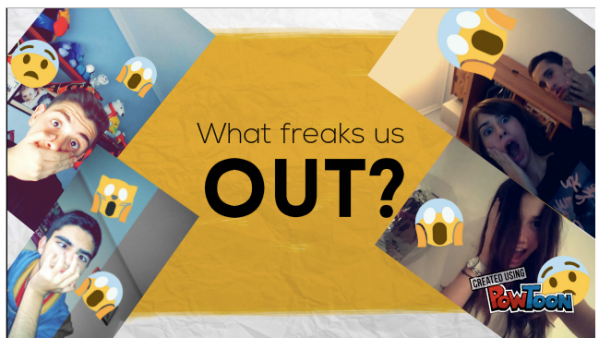
Onofre, Alfonso, Mª del Mar, Laura Carrillo and Juanjo
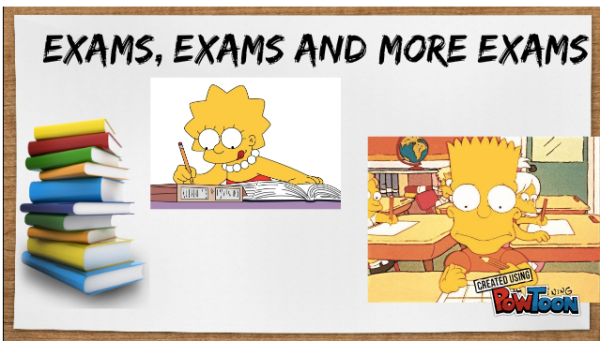
Laura Vidal, Laura Palazón, Julián and Luis
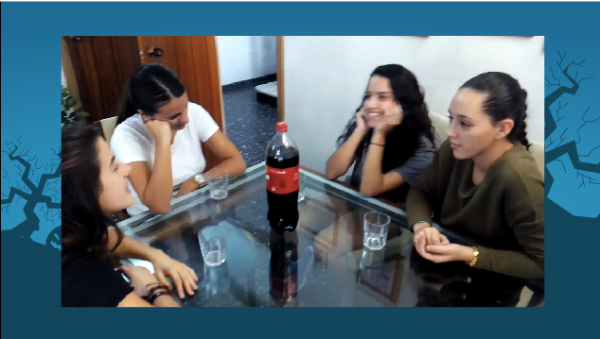
Isabel. Jesús, Cristina, Andrea and Lucía

Once they finished their awesome presentations, students were asked to collaborate on a digital wall in which they had to give solutions for stressful situations. Have a look at some of them. They might come in handy at some point in your life, you never know!
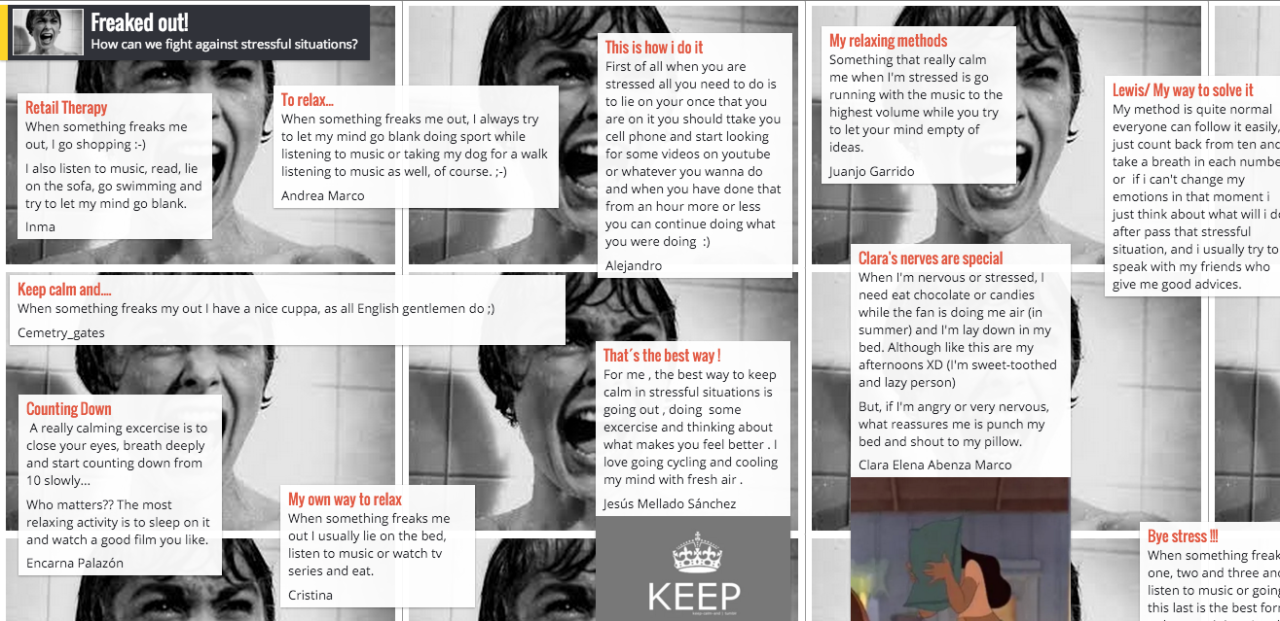
Screen Shot 2015-11-04 at 16.00.29

27 April 2015

Terrorism nowadays

Today we publish a new work from IES Vicente Medina in Archena (Murcia). The students 3ºESO B and C have done an amazing activity about the Terrorism nowdays. 

Inmaculada López, the English teacher tell us:


After nearly 3 months working on The Troubles in Ireland with 3º ESO I thought the best way to draw things to a close would probably be to make the students think about recent examples of terrorism and what the best ways to fight it might be.
Most of them start their work explaining why Ireland is an example of progress to then move on to mention examples of terrorism nowadays such us Charlie Hebdo, the Bardo National Museum attack, Malala’s story and her will to change things no matter the cost, among others.
Finally, they write about possible solutions to fight terrorism mentioning that both sides have to make an effort because…

WHERE THERE IS A WILL THERE IS A WAY

Click on the photo to see their work:
Screen Shot 2015-03-28 at 20.18.24

18 September 2014

On the road again!


Summer is over, so here we are again!!
A new school year begins and most of us will have to get used to new timetables, some will teach new students or even work at a new school , but all of us will face new challenges and look forward to achieving new goals, won’t we?
From the ESL Times we just want to welcome you back and wish you the best of lucks for the present year.
We want to keep managing this space in order to make it easy for you to use it, to share your students’ productions or your teaching ideas or just letting us know any news you think might be of interest. We will do our best to spread the word.
So, please, keep tuned; new sections and new features will appear here soon and, as usual, you –and your students- will be the stars!!
Happy back to school!!


19 June 2014

Thanks, Educalab


Today, we want to say "Thank you" to the  EDUCALAB team who have chosen our blog as their recommended one for the current week in the #Educablog category .
We feel very much pleased and honored with this distinction and would like to say special thanks to our reporters who have contributed to keep this blog alive by sending their ideas, experiences, classroom projects, opinions, etc. 
We are very happy to manage the technical issues as well as try and make the way smoother, but it's you, collaborating teachers, and your students, who have made it possible that we have published some 150 posts and received more than 70,000 visits so far. 
This recognition by EducaLAB gives us energy to go on growing and we hope it will also help you -hesitant reporter-  venture to publish your first entry.
We'll be here, ready to spread YOUR word!!


5 June 2014

We talk freedom


We talk freedom at school because we believe education is one of the best ways to fight against different types of slavery. We would like to take the opportunity to show our rejection towards the kidnapping of the girls in Nigeria.


These are the students’ oral presentations of their work on different types of slavery:


THE SALE OF CHILDREN by Elvira, Tania, Marina, Elena and Ángela Solana (2º ESO B):


HUMAN TRAFFIC AND SEXUAL EXPLOITATION by Marta, Vero, Berta, Rocío, Ángela Martínez and Mª Isabel (2º ESO B):


FORCED MARRIAGES by Silvia, Celia, Mª José Bermúdez, Mª José Buendía and Raquel (2º ESO B):


CHILDREN AT WAR by Miguel, Gabriel, Pablo Villegas and Pedro Gabarrón (2º ESO B):


CHILD SOLDIERS by Antonio, José Ramón, Fran, Ricardo and Iván (2º ESO B):

HUMAN TRAFFIC AND SEXUAL EXPLOITATION by Clemente, Pedro Ayala, José Juan, Pablo Fernández and Carlos (2º ESO B):

5 May 2014

Freedom for 2º ESO students

The students at IES Vicente Medina in Archena (Murcia) share with everybody their opinion about Freedom. An excellent work!. 

Inmaculada López, the English teacher tell us:

After a loooong second term learning about different types of slavery, from the past with the plantations in the southern states of North America up to nowadays with modern ways of slavery, we decided that one of the best ways to round off this topic was to make a video in which you had to express what freedom means to you. Many of you agree that freedom is to be able to do whatever you want, to go wherever you please, to express yourselves freely, among other things. Some of your pics are great. Thanks again for your effort and motivation to learn in many other ways rather than just a textbook. Enjoy your work:

Silvia, Raquel, Mª José Bermúdez, Mª José Buendía and Celia (2º ESO B)
Marina, Tania, Ángela, Elena and Elvira (2º ESO B)
Marta, Berta, Verónica, Rocío, Mª Isabel and Ángela Mtez (2º ESO B)
Alberto, J. Manuel, Arturo, Pablo, Fran and Juanjo (2º ESO C)
Lorena, María Molina, Tamara, Nerea and Celia (2º ESO C)
José Antonio y José Ismael (2º ESO C)
Gabi, Miguel, Pedro G and Pablo V (2º ESO B)
Iván, Ricardo, J. Ramón, Fran and Carlos (2º ESO B)
Cecilia and Laura (2º ESO C)
Alejandro García, Jaime and Ricardo (2º ESO C)
Máximo and Jesús ( 2º ESO C)
Pablo F, Clemente, Pedro Ayala, José Juan and Antonio (2º ESO B)
Alejandro Martínez and Alejandro Salmerón (2º ESO C)


11 June 2013

Creativity in Education is not an option

Why is Creativity important in Education? 
Discuss.

Watch this interview with Sir Ken Robinson and reflect on his beliefs and thoughts. Do you share them?


Then, answer the following questions:

1. According to Sir Ken Robinson, there’s a false assumption when people think about education. Which is it? 
2. How does that assumption show itself? 
3. What is the contradiction between politicians’ and business leaders’ responses? 
4. What kind of survey did IBM launch?
5. What was found out by means of this poll? 
6. Why were CEOs worried about that issue in terms of business running? 
7. What does creative teaching require? Why? 
8. Why is there a cultural imperative too? 
9. What sort of challenges do we face in our current world? 
10. What is a task for Education? 
11. What is the third big reason to go into creative teaching, and why? 

After listening to the interview, discuss with your mates:

Do you agree with Sir Ken Robinson?

Are you ready to transform Education?

How?

If you'd like to check how well you have done with the listening comprehension questions, you can use this answer key sheet.


10 June 2013

Multiple intelligences

Picture from www.123rf.com

Let's start with a brief debate:

If you had to define intelligence, what definition would you give?
How do you think we currently measure intelligence? Do you think it should be measured that way?
Where do people get their intelligence from?

Now, go to an intelligence test:

Visit this intelligence test and try to answer as many questions as you can. 

Do the questions give a true reflection of intelligence, in your opinion?

Let's watch a video where Horizon takes seven people who are some of the highest flyers in their field - a musical prodigy, a quantum physicist, an artist, a dramatist, an RAF fighter pilot, a chess grandmaster and a Wall Street trader. 

Each is put through a series of tests to discover who the most intelligent is. 


Any clue about who might win this battle of the brains?


But, before actually congratulating the winner, I think you should have a look at these other intelligence tests:

Getting the cork out of the bottle.
How many uses can you think of for a sock?
Creating a picture called 'the Creative Process', in five minutes, with only a piece of paper and some pencil crayons.
Building the tallest tower with Jenga.

While you are watching, think of answers for the questions below:

How is intelligence currently measured?
How do the experts in the programme consider that intelligence should be measured?
Where do people get their intelligence from?


Finally discuss your answers.


14 May 2013

Kant: an illustrated biography

Listen to this biography of Kant, narrated by @juanatt, an ESL learner and Philosophy teacher.

8 May 2013

Metaphors in American Literature


Commentary about metaphors used by Anne Bradstreet and by Jonathan Edwards.

In order to establish the metaphors used by Anne Bradstreet and Jonathan Edwards I have selected the excerpts in which they showed the figurative language.

A. Bradstreet poem The Author to Her Book contains an extended metaphor because it goes along the text. We can see how she intentionally controlled the imagery through the poem which related her book to the birth of a child. The vehicle is her fatherless child. In this way she calls the attention to her authorship without help of men, she apologizes for the “ill-formed offspring of the feeble brain” (line 1). It is a recognised strategy to show true humility and modesty expected from a honorable woman. In line 2 “Who after birth didst by my side remain” the tenor can be interpreted as the delay of her publication and “My rambling brat should mother call” (line 8) as it were a spoiled child, justifying that is going to be published by her brother.

In her elegy On My Dear Grandchild Simon Bradstreet she uses the figurative language of flowers to express the beginning and end of a life in a short time. And also to enhance the deception for an almighty God. One example of the vehicle is in line 3 “three flowers” and the tenor are the children who died. In this sense the flowers are something extremely beautiful and pure which died suddenly because of the natural cycle of life.

J. Edwards sets out the rhetorical strategies to give a new set of images that were very familiar in his time. But, how? Eliciting emotional responses to sermons, they are an example of eloquence partly because it is filled with tension and suspense 2. He communicated his ideas in a language of sensory experience. Producing an impression in their minds. In the first extract from Sinners in the Hands of an Angry God we can identify the vehicle “bitter and poisonous fruit” (line 6) with the tenor of the sin if we go to the imagery of Adam and Eve in the paradise. A second metaphor is extended along the vehicle of “great waters” (line 78), “floods of God's Vengeance” (line 82) which tenor would talk about the abysm which follows God's wrath. Following the metaphorical structure of the text, there is only one way of “holding the waters back” and it is with conversion and God's help.
(397 words)

2Gibert, Teresa. American Literature to 1900. Editorial Universitaria Ramón Areces: Madrid, 2009. Page 82.

By Pilar The Moon

7 May 2013

An essay on American Literature: Autobiographical Elements


ESSAY ON AMERICAN LITERATURE

Comparing and contrasingt the use of autobiographical elements in the writings by John Smith, William Bradford, Anne Bradstreet and Mary Rowlandson.

This essay sets out the terms which put forward the contrast points of the autobiographical aspects of the four authors. These authors were pioneers as they started literature tradition in America. The american literature found evidence that the colonial discourse as settlers had provided them a new vision of the world different from other authors of their times. Differences in their works are because of their life experiences.

Firstly, I point out a contrast showed by their relation to religion. In that sense, Smith is the only one whose role as adventurer and hero has secular concerns. He had been payed by the investors in London, so he had economical intentions and enhanced his work in the colonies with a mixture of fact and fiction. In spite of this, Bradford and the two women referred to a spiritual concern, related to their condition of Puritans, which made them to tell the true facts from a perspective of a Puritan reality. The sources they used are influenced by this condition: classical authors are present in Smith, and essentialy biblical sources are basic in Puritan authors' references. This passages or quotations were directly related with the background of their audiences. Also that made them to convey a didactic and plain style.

Secondly we distinguish differences in the gender, they were influenced by the social behaviour of the times. Women were considered to have little to say in men's society. Consider their role belonging to a Puritan organization of society were mere caregivers and beloved wives. Converserly, they went further and expressed their own opinions in their works. William and John1 wrote back to England as a mission to inform their investors and society about their fisrt impressions of the New World. Following these argument the roles influenced directly in their way of writing.

The perception we have about Purintan thought is that women should be discreet and passed a certain censure in their writings. Having said that we stress some common elements the two women had in their autobiography, material losses and psychological hardships. Their daily life in colonies are reflected in their discourses, living hand by hand with Natives made them their own opinion about what was happening, speaking about the death of children, the crude vision of war, the survival personality of human being. In most occasions troubled by religious thoughts which seemed not as close as they wished.
1Gibert, Teresa. American Literature to 1900. Editorial Universitaria Ramón Areces: Madrid, 2009. Pages 15 and 29.

By Pilar The Moon

17 April 2013

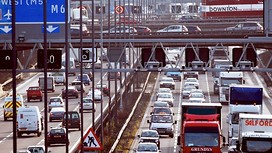
Drivers should be charged for using motorways and roads linking major towns and cities


People use motorways and roads to travel to another city for commuting, for paperwork, to go to the doctor or just for fun.

Vehicle owners have increased dramatically over recent decades, and consequently traffic congestion has become a problem for many cities. In order to solve this issue the government believes that drivers should be charged for using motorways and roads linking major towns and cities. Although some people argue that this fee has negative effects on drivers, in my view it would be effective to reduce traffic congestion.

Safety and maintenance of motorways and roads are the main reasons that the government uphold. Nevertheless, there are those who say that it is the government's job and they are not prepared to pay extra money.

Pollution is another negative effect of traffic. For instance, many people argue that the government should be aware of this problem and not look away. This may have been true in the past, but nowadays paying to use motorways and roads would reduce the number of vehicles and possibly encourage other means of transport and so, contribute to reduce pollution.
To sum up, I believe that this charge would be beneficial to diminish traffic congestion and drivers would feel happier if they were paying for an effective traffic and pollution policy.

Photo from www.ft.com


9 April 2013

Euthanasia

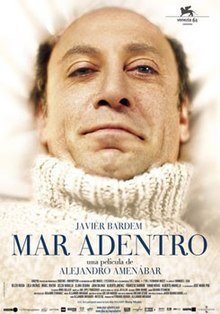
Listen to Juanjo Alonso, @juanatt, who gives his viewpoints on euthanasia and talks about how this issue was dealt with in the film called The Sea Inside.


Picture from Wikipedia