Showing posts with label Languages. Show all posts

1 December 2014

Play phrases and practise your pronunciation

PlayPhrase.me offers you the possibility to improve English pronunciation and patterns of intonation with your favourite phrases out of famous scenes of TV shows and movies.


Just key in the phrase or chunk of text you would like to practise and the tool will come back to you with the bits where the phrase was uttered by various actors and actresses at various films or TV shows. You will then be ready to drill the phrase as if it were a karaoke machine, as the phrase rolls down, highlighted below the sliding scenes out of which it has been singled out.


Quite a dynamic enjoyable way to keep your English intonation and pronunciation up. Enjoy it!


3 November 2014

Do you know The ESL Times?

Today we want to share with everyone a great job about this project. 

It's a presentation that has been made by Eva Bombin Orgaz (@BurMagisterio), Jairo García, Cristina Ibañez and Laura Galarreta from Burgos University (first grade of Primary Education)


26 November 2013

JFK

Fifty years ago, President John F. Kennedy was assassinated by Lee Harvey Oswald while riding in a motorcade through downtown Dallas, Texas. Although his life was cut short, his legacy of supporting civil rights and American technological advancement still resonates today. 

This week's Do Now conversation is framed around how President Kennedy inspired a generation of scientists with his mission to be the first country to go to the Moon. 

Does your generation have a “Moon mission”? And if so, what does it look like? If not, what should it look like?

You can view the Do Now here:
http://blogs.kqed.org/education/2013/11/22/what-is-this-generations-moon-mission/


To respond to the Do Now, you can comment below or tweet your response. Be sure to begin your tweet with @KQEDEdspace and end it with #DoNowJFK

Brought to you by PBS NewsHour Extra.

6 November 2013

How Should We Address Poverty? Do Now as a class!!!

How should the U.S. treat people who are living in poverty? 

What would an anti-poverty agenda look like? 

Devise one piece of legislation that could make a difference.

The issue comes up as the US Census Bureau announced that the US poverty rate has remained roughly at this same level since 2011. 46 million Americans — 15 percent of the population — are now counted as living in poverty.

The main resource is an interview of  Robert Reich who talks about “Inequality for All,” a documentary about the former labor secretary’s personal crusade to explain to Americans why everyone should care about the nation’s growing economic disparity and divisiveness. 


There is also a great comic infographic that defines poverty from KQED's The Lowdown (under the More Resources section).

If you are teaching B2 - C1 lessons, join Do Now and get in touch with lots of students and teachers around the world at the same time as you make your contribution on current issues through social networks, from an educational point of view.

Here's the Do Now: http://blogs.kqed.org/education/2013/11/01/how-should-we-address-poverty/


To respond to the Do Now, you can comment below or tweet your response. Be sure to begin your tweet with @KQEDEdspace and end it with #DoNowPoverty


28 October 2013

Halloween VoiceMail

Enjoy receiving voice messages through SpeakPipe?

What about spooky Halloween voice messages?

Halloween is just around the corner, so we built a public Halloween voicemail board for recording, listening to, and sharing scary Halloween voice messages.

Visit the board here.

Go ahead, record your spooky messages and share them with others.


Don't be shy - you can become a Halloween spooky-star!


23 September 2013

Is Health Care a Human Right?

This week's Do Now asks students if they think that health care is a basic human right and if all people should, regardless of wealth, have access to quality health care.  This issue is back in the news since open enrollment in the Patient Protection and Affordable Care Act (ACA) marketplace, popularly known as Obamacare, begins October 1, meaning that people will soon be able to sign up for government-subsidized health insurance programs. The House GOP has also launched a shutdown battle by voting to defund Obamacare.

Here's the link to the Do Now:

http://blogs.kqed.org/education/2013/09/20/is-health-care-a-human-right/


whitehouse.gov

To respond to the Do Now, you can comment below or tweet your response. Be sure to begin your tweet with @KQEDEdspace and end it with #DoNowACA

10 September 2013

Do Now

Do Now is a weekly activity for students to respond to current issues through the use KQED's award-winning online media resources and social media tools like Twitter.

Do Now orientation

Below are some materials for you to look at at your leisure. The orientation is asynchronous, which means that you can view them at any time between now and Sept. 13.
To show that you have completed looking at the materials, I require that you fill out an action plan. This plan will help you think through Do Now implementation with your students. It's a Google form that you will fill out and the link is at the end of this email.

So here are the materials for the orientation. They consist of videos for viewing and then the action plan that you must fill out. The entire orientation should not take more than 2 hours to complete. For each part, click on the title of the section to access the video.


Part 1: Set the stage: How Do Now looks in the classroom. This video profiles how a class at Burton High School in San Francisco implemented KQED Do Now. We hear from the Social Studies teacher and her students about the project and its impact.


Part 2: The Value of Do Now: KQED Do Now overview. This video is a basic overview of KQED Do Now, outlining what Do Now is and explains how it adds value to learning.


Part 3: Twitter Basics

This section contains 4 short videos (well, the Twitter 101 is a little longer) that provide a basic understanding of Twitter, its interface, functionality, how to download it and use it, and how to use if for Do Now. These videos may be useful to share with your students as well. The links to the videos and the guide are here:
1. Twitter 101 – An Overview of Twitter's Interface and Functionality

2. How to Set up a Twitter Account on your Computer

3. How to Download the Twitter App and Set Up an Account on a Mobile Device

4. How to Access Do Now on Twitter and Tweet to Join the Conversation

Part 4: Preparing to Implement Do Now with your Class

This video explores all of the variables and challenges of implementing Do Now in the classroom, and will help you plan for success. We also published a Guide to Using Twitter for Your Teaching Practice that can be useful for thinking about how to introduce it to your class in an educational context. You can access the Twitter Guide here<http://education.kqed.org/edspace/how-to-use-twitter-in-your-teaching-practice/&gt;.

Part 5: Try This Week's Do Now for Practice
Go ahead and try doing this week's Do Now, which looks at the pay for fast-food workers. We are asking students whether they would pay more for fast food if the money would go to increasing workers' pay. Here's the link to this week's Do Now:

http://blogs.kqed.org/education/2013/09/06/making-fast-food-for-little-pay/

Or you can go ahead and create/open your Twitter account, follow @KQEDedspace and then find our latest Do Now tweet.
You can retweet something meaningful that you find on Twitter, tweet an interesting article that you feel addresses the issue, tweet an opinion, or reply to someone who already tweeted for this Do Now. Remember to use @KQEDedspace and #DoNowFastfood in your tweet.
The last part of the orientation asks you to fill out the action plan which is a link to a Google form where we ask a series of questions that will help you come up with a strategy to implement Do Now. You should copy and paste your responses so that you have a record of them. Again, the action plan is due on Sept. 13 so that you are ready to begin Do Now with your students the week of Sept. 16.

21 June 2013

ThingLink in the classroom

ThingLink is a simple piece of code that users can install on their website or blog. This code allows teachers or students to designate parts of sites or pages (pictures, etc.) that will produce a pop-up with a description and or a link to something else on the web. 

This is a great way to make static images interactive as well and using ThingLink will also allow users to track analytics of the images and links that they have shared.


13 June 2013

Colour Your English

An English free application: "Colour your English". Depeloped by Elisa Bueno Brinkmann and Manuel Merlo Fernández, both are teachers in IES Abdera-ADRA, Almería.


"Colour your English" is aimed at children between twelve and thirteen aged (1st and 2nd ESO level) to learn and improve their english. 

The main character, a twelve years olg boy, named Brian, will guide the students through his life along the multimedia activities and resources. 

There are four different modules: People in my life, Welcom to my school, A house in the country and Let's go places. All of them have seven different sections: Vocabulary, Grammar, Storyline, Culture, Meeting Point, WebQuest, Open Camera.

"Colour your English" wan the INTEF 2n price to Materiales Educativos 2008.

So after this short introduction to this free app, available to work on line as well as to download in your computer, it only rests to go on check it, and enjoy yourself with it!. 

11 June 2013

Creativity in Education is not an option

Why is Creativity important in Education? 
Discuss.

Watch this interview with Sir Ken Robinson and reflect on his beliefs and thoughts. Do you share them?


Then, answer the following questions:

1. According to Sir Ken Robinson, there’s a false assumption when people think about education. Which is it? 
2. How does that assumption show itself? 
3. What is the contradiction between politicians’ and business leaders’ responses? 
4. What kind of survey did IBM launch?
5. What was found out by means of this poll? 
6. Why were CEOs worried about that issue in terms of business running? 
7. What does creative teaching require? Why? 
8. Why is there a cultural imperative too? 
9. What sort of challenges do we face in our current world? 
10. What is a task for Education? 
11. What is the third big reason to go into creative teaching, and why? 

After listening to the interview, discuss with your mates:

Do you agree with Sir Ken Robinson?

Are you ready to transform Education?

How?

If you'd like to check how well you have done with the listening comprehension questions, you can use this answer key sheet.


10 June 2013

Multiple intelligences

Picture from www.123rf.com

Let's start with a brief debate:

If you had to define intelligence, what definition would you give?
How do you think we currently measure intelligence? Do you think it should be measured that way?
Where do people get their intelligence from?

Now, go to an intelligence test:

Visit this intelligence test and try to answer as many questions as you can. 

Do the questions give a true reflection of intelligence, in your opinion?

Let's watch a video where Horizon takes seven people who are some of the highest flyers in their field - a musical prodigy, a quantum physicist, an artist, a dramatist, an RAF fighter pilot, a chess grandmaster and a Wall Street trader. 

Each is put through a series of tests to discover who the most intelligent is. 


Any clue about who might win this battle of the brains?


But, before actually congratulating the winner, I think you should have a look at these other intelligence tests:

Getting the cork out of the bottle.
How many uses can you think of for a sock?
Creating a picture called 'the Creative Process', in five minutes, with only a piece of paper and some pencil crayons.
Building the tallest tower with Jenga.

While you are watching, think of answers for the questions below:

How is intelligence currently measured?
How do the experts in the programme consider that intelligence should be measured?
Where do people get their intelligence from?


Finally discuss your answers.


7 June 2013

Chicken breasts with tomato sauce

Thanks to @gracielasd, who designed this recipe and cooked an online meal for all of us while learning English at EOI Luarca.


Ingredients:
Olive oil.
 Four chicken breast fillets
Tinned tomatoes.
An onion.
Some cheese.
Some flour.
2 eggs.
1/4L Whipped cream.
A lettuce.
Walnuts.

Add the finely chopped onions to the hot olive oil in a pan.
Mix the tomatoes.
Sprinkle with the salt and oregano and stir the mixture occasionally.
The sauce has to be in low temperature during 20 minutes; then you can add the whipped cream and  keep warm for five more minutes.
While the sauce is ready, arrange in a shallow dish and add one chicken fillet, a slice of cheese and the other chicken fillet. Sprinkle with  salt.
Coat the fillets with flour and beaten eggs.
Then, sear for about three minutes or until the fillets begin to cook through Uncover skillet and flip the fillets.
At the end, add the chicken fillets to the sauce and cook for five more minutes.
The chicken is accompanied by a salad.
Trim off the bottom of the lettuce and put in a salad bowl with some nuts. Add a little salt, lemon juice and olive oil.

30 May 2013

The Book of Illusions

Paloma, a B2 ESL learner at EOI Luarca, recommends this book by the famous American writer.


The narrator of this story is David Zimmer, a literature professor who has recently lost his wife and two sons in a tragic plane crash. He escapes from the world and spends his days drinking and watching television. He divorced society, quit his job and broke all contact with the people in his life.
One day he laughed while he was watching a Hector Mann's movie on television. That moment made him realize that there was still something inside him that wanted to live and he realized he needed something to occupy his mind with. So he decides to write a book about Hestor Mann and his movies. However Davis is unable to explain Hector Mann's disappearance in 1929.
Aparently there was no reason to disappear, Hector Mann has a promising career, he was handsome and popular with women. After publishing the book a friend from the past called and asked him to do a traslation of a French writer, Chateaubriand. David Zimmer also received a letter from Frida Spelling claiming to be Hector Mann's wife. She said she had read the book and wanted to know if he would like to come to New Mexico and meet Hector.
David initially believed the letter to be a fraud, someone playing a joke on him. But he received more letters and he started thinking maybe Hector Mann was still alive. Soon a woman called Alma arrived at his house to take him to New Mexico to see Hector by force if necessary. Alma told David Hestor Mann's story and why he had disappeared, how he had caused the death of a woman he loved, he had run away and assumed a new identity. After several jobs he started working in his lover's family. That set him on the road once more.
At the same time we are following two different stories: the story of Alma and David and the story of Hector and Frida Spelling. Both Hector Mann and David Zimmer are caught up in tragic and destructive events and both are seeking to find peace, to find a way to live with themselves and the world.
It is a thought provoking and emotionally stimulating novel. Auster makes the story easy to read and the story holds your interest. 
On one hand I find the detailed descriptions of Hector Mann's films tiresome, on the other hand it is an enjoyable story. On the whole I found reading The Book of Illusions entertaining and stimulating.

27 May 2013

Structures

Here you are a Wix Presentation to explain Structures to 2 ESO students that @MfMonse, a C1 ESL learner at EOI Luarca, has designed in order to explain these contents to her own learners, in English.


14 May 2013

Kant: an illustrated biography

Listen to this biography of Kant, narrated by @juanatt, an ESL learner and Philosophy teacher.

3 May 2013

The Big Lebowski

Aurelio, a B2 ESL learner at EOI Luarca, is telling you all you'd like to know about this well-known film.


29 April 2013

Hake with mariniere sauce

Yolanda, a B2 ESL learner at EOI Luarca, is cooking for us today.

Serves: 2

INGREDIENTS:


- Fresh hake
-6 prawns
-250 g clams
-2 medium onions
-1/2  pepper
-1 small tomato
-1 l water
-olive oil
-salt
-1 dessertspoon flour
-1 dessertspoon paprika
-parsley


First of all you have to cut the hake in medium slices keeping back the head.
Now, we are going to prepare the broth so, pour the water in a saucepan and heat it until  it is boiling, then add the head, the prawns and the clams and boil them 10 minutes more or less and of course season with salt. Finally, keep back the prawns and the clams.
Meanwhile season the hake slices on both sides.

Let´s prepare the sauce!
Heat enough olive oil just to cover the bottom of a saucepan.  When it´s ready add the chopped onions together with the pepper and the tomato cut in small cubes and fry them until tender, then add the flour and the paprika and stir them. Pour a little broth and let them boil 10 minutes and finally blend them.

This should be done just at the moment of eating. 
Heat the sauce in a clay pan, then add the hake and cook on low heat for five minutes on one side, then  turn over the slices and decorate with the clams, the prawns and the parsley and cook another five minutes more.

Ready to eat!!!

26 April 2013

Colour idioms

How many colours do you know?
And how many idioms can you associate with colours?

Answer the questionnaire below and find out!


22 April 2013

A Wall of Books

23 April is World Book and Copyright Day

You are invited to take part in this activity to celebrate the day. This is a 'literary' wall. The pins will be used to build a wall of books for display and used to promote reading. On the wall please pin your favourite book and why you like it. You could pin any book or title, a favourite from childhood, a current book or something you’ve read and enjoyed. 
The pins can be embedded in your school's or classroom blogs, sites, wikis ...


17 April 2013

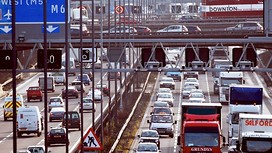
Drivers should be charged for using motorways and roads linking major towns and cities


People use motorways and roads to travel to another city for commuting, for paperwork, to go to the doctor or just for fun.

Vehicle owners have increased dramatically over recent decades, and consequently traffic congestion has become a problem for many cities. In order to solve this issue the government believes that drivers should be charged for using motorways and roads linking major towns and cities. Although some people argue that this fee has negative effects on drivers, in my view it would be effective to reduce traffic congestion.

Safety and maintenance of motorways and roads are the main reasons that the government uphold. Nevertheless, there are those who say that it is the government's job and they are not prepared to pay extra money.

Pollution is another negative effect of traffic. For instance, many people argue that the government should be aware of this problem and not look away. This may have been true in the past, but nowadays paying to use motorways and roads would reduce the number of vehicles and possibly encourage other means of transport and so, contribute to reduce pollution.
To sum up, I believe that this charge would be beneficial to diminish traffic congestion and drivers would feel happier if they were paying for an effective traffic and pollution policy.

Photo from www.ft.com